
Kumi's Review
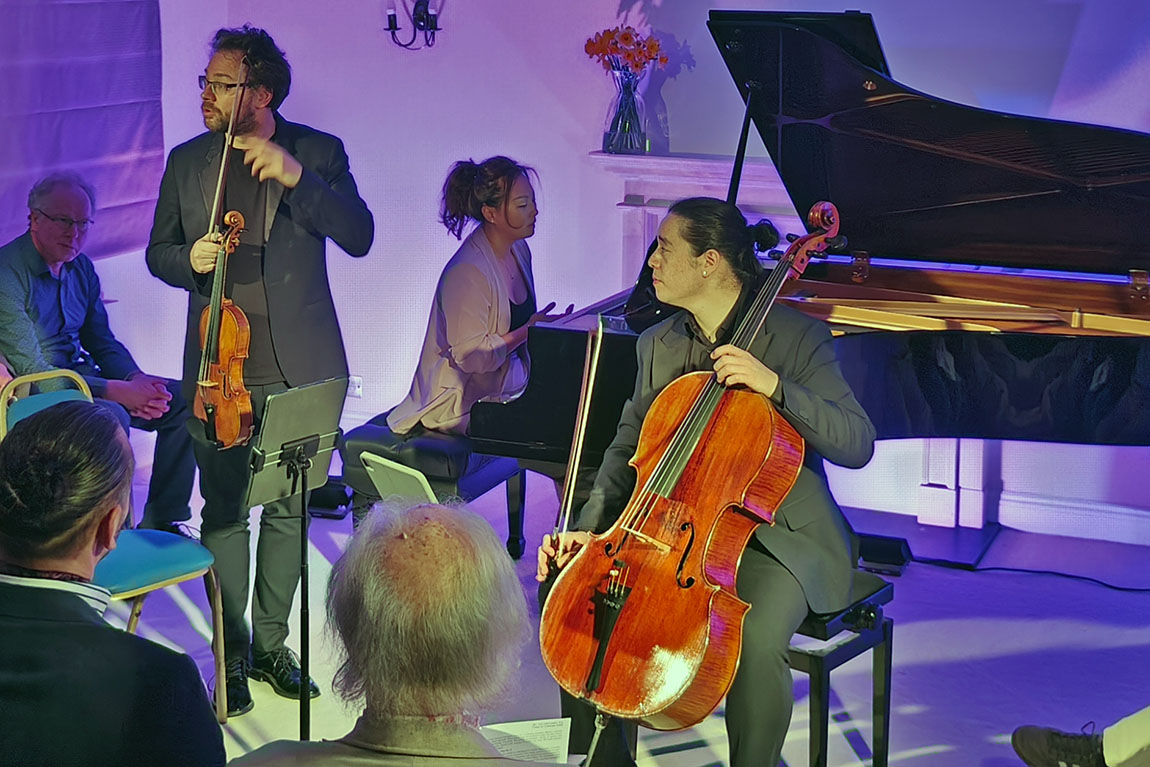
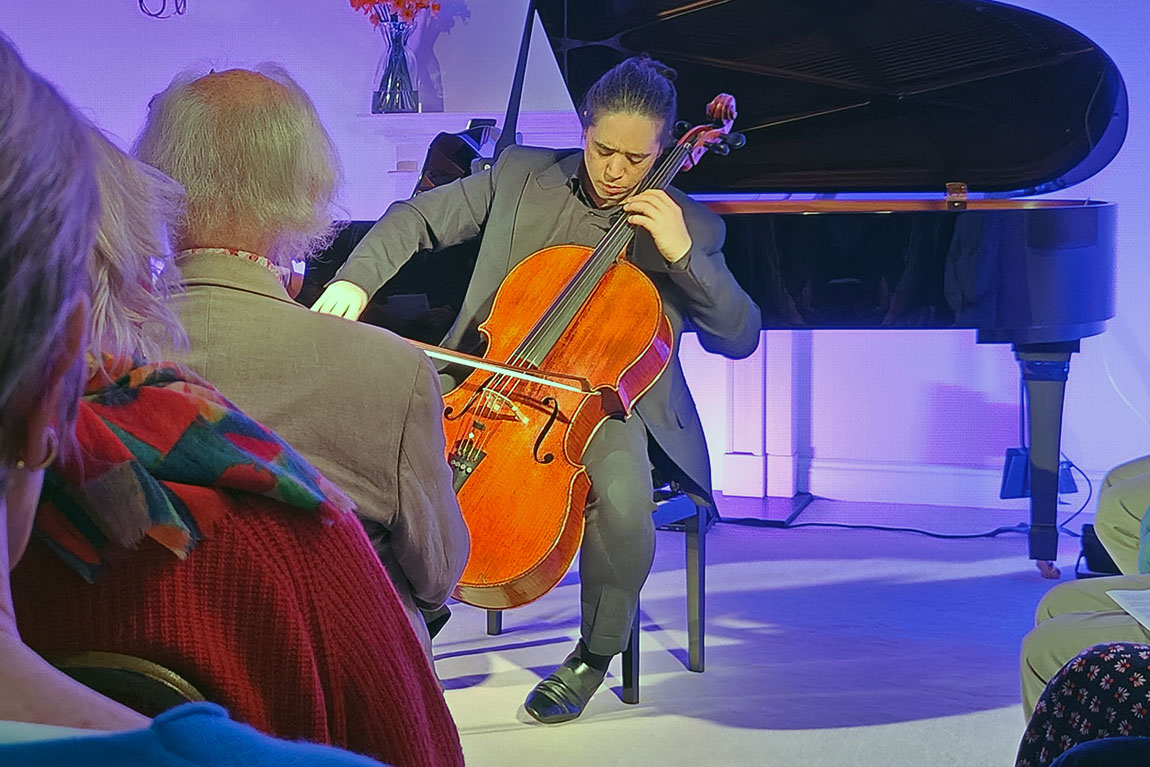
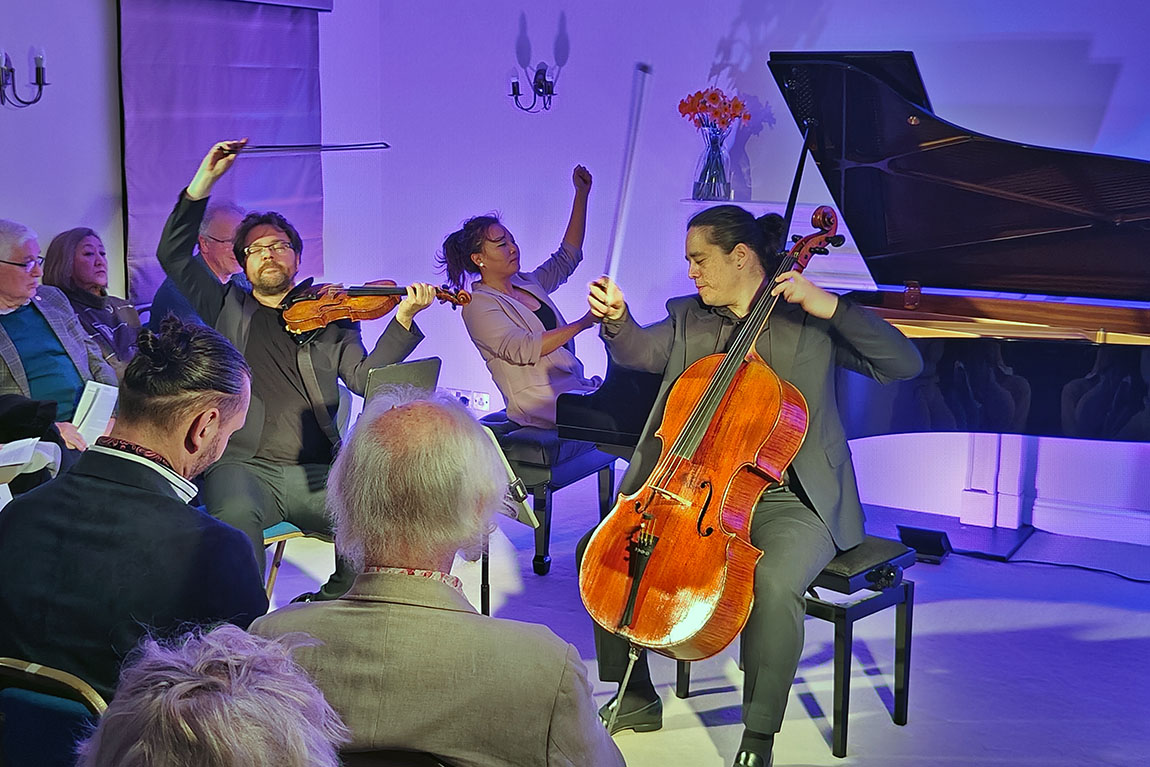
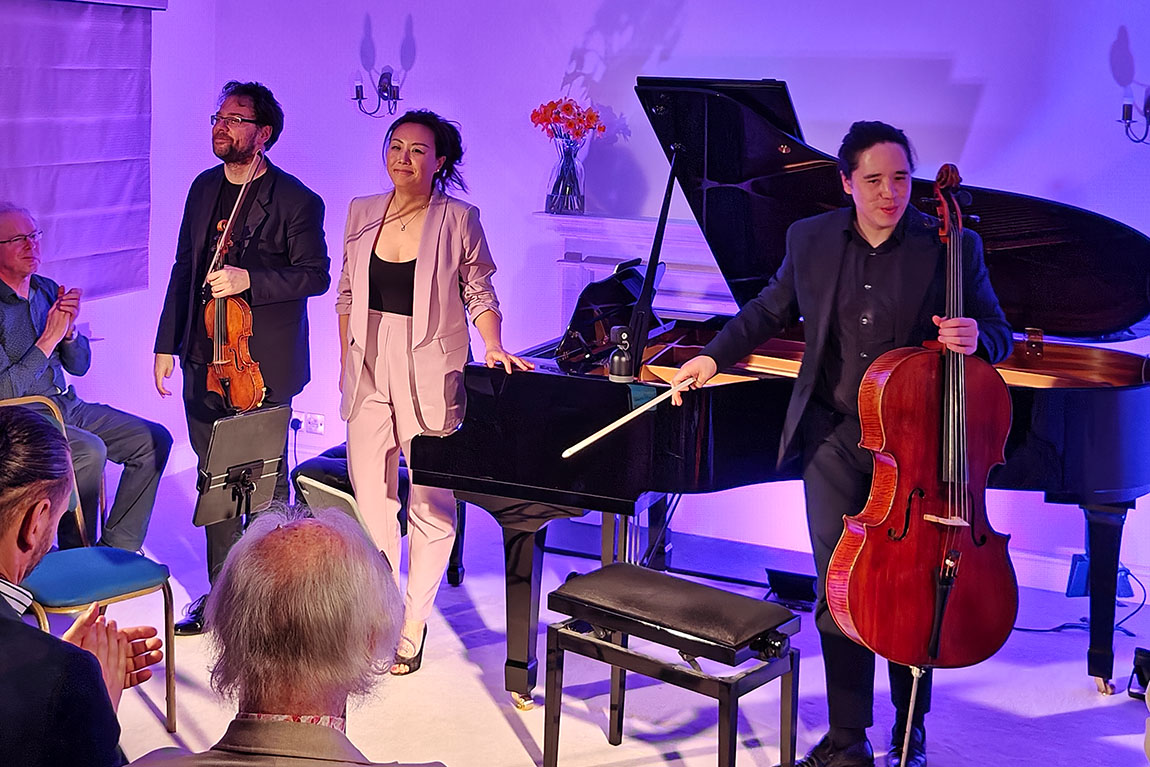
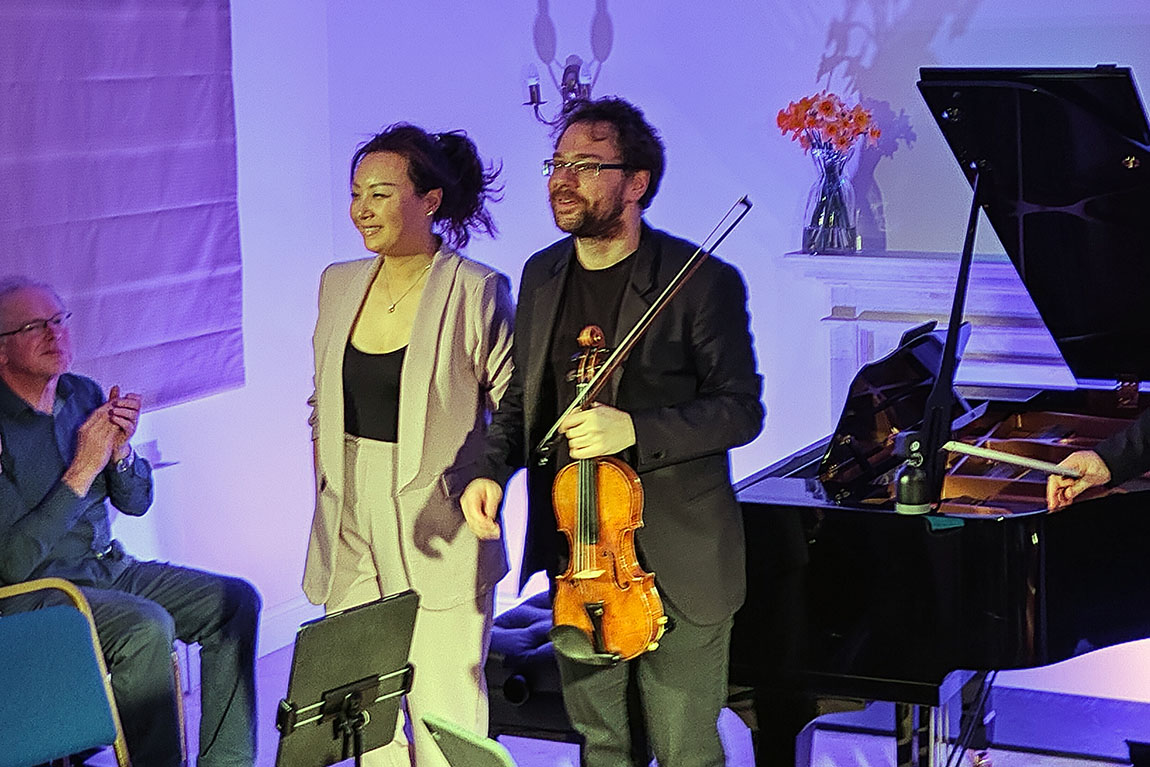
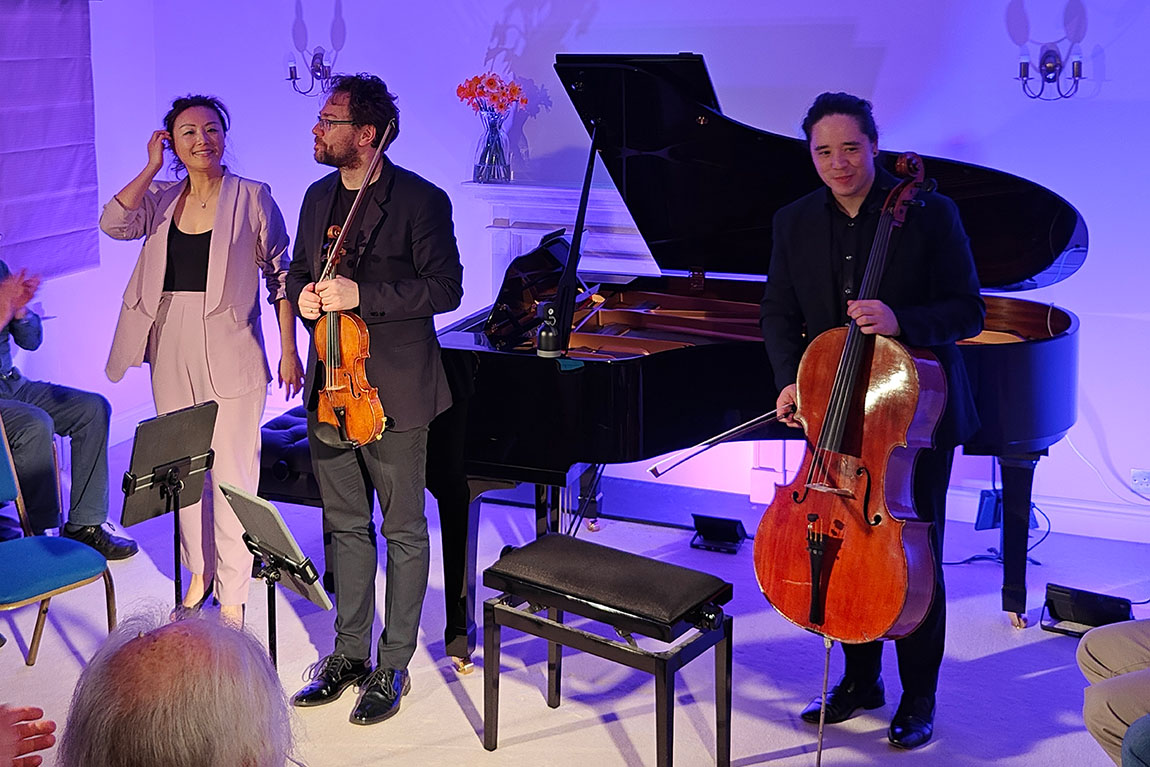
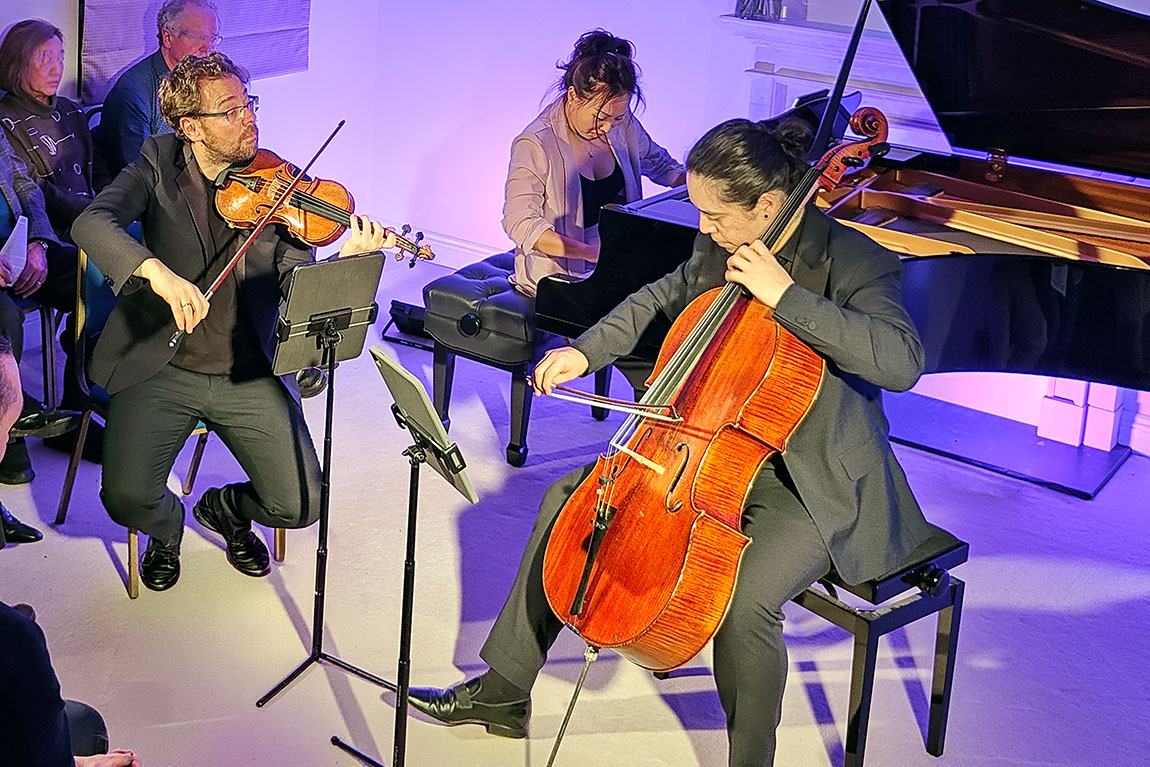
It was an utter pleasure to welcome the Sitkovetksy Trio! The world-renowned group showered us with exquisite voices from the late 18th century – it was a dream-come-true programme which the audience listened to intently, almost turning into greedy receivers to absorb all the gorgeous harmony that were pouring over us.
When commentators discuss the key criteria in any instrumental ensemble, inevitably “togetherness” and “trust between each other” come high on the list. The Sitkovetsky Trio is well regarded for their matchiness, but until you are actually sitting in their concert, you just do not realize how excellent they are!
There were too many highlights in their performance to list. In Bruch’s Nachtgesang, the trio brought out the serene beauty of dusk where we felt the utmost intimacy and delicacy. In contrast in the fourth selection, Allegro vivace, ma non troppo, their playful exchanges were infectious – the audience enjoyed the high-spirited and melodious exchanges.
From Sasha’s brief commentary, we learned that Cécile Chaminade’s Piano Trio No. 2 was one of their most adored works. Well, now it has become ours too! The opening movement was powerful and had a sense of urgency. The trio’s playing was passionately imaginative; it was as if we were daring to enter an unknown territory, deep in the woods, but with brave determination. Acute and passionate, their well-bonded trust was apparent. The slow movement brought a complete change; it was as if doors has been opened to another world. The opening melodious lines played by the violin and cello, in octave sync over the gentlest piano accompaniment, were simply breathtaking. In the finale, we felt punchy agile exchanges which pinned us down to our chair until the end.
With Brahms Piano Trio No. 2, the trio offered everything you would seek in chamber music. There was the symphonic expansiveness, power, rhythmical sophistication, lyricism, emotional boost, rigor, intimacy, warmth and more. Each instrument had a dynamic statement while the interplay among them sparkled and remained superbly balanced. Their tones marveled, textures rich, technical command perfectly in place. It was a totally satisfying experience to be immersed in the trio’s magic.
Then the utterly gorgeous slow movement from Mendelssohn’s Piano Trio in D minor came as an encore. This was a tear-choking moment for all, which could not get any more romantic.
Programme Notes
Bruch: Eight Pieces (selection)
By the time these miniatures were written in 1898, Max Bruch was a venerable and widely respected figure in German musical life. Though posterity has largely fastened upon his First Violin Concerto, Bruch himself was a composer of broad sympathies and deep lyrical instinct, drawn consistently to melody as the primary vehicle of expression. Chamber music occupied him throughout his life, and these late pieces reveal a craftsman still capable of intimacy, warmth and finely shaded character.
Originally conceived for clarinet, cello and piano, the set belongs to a rich tradition of domestic chamber music-making. The late nineteenth century delighted in such character pieces: concise, evocative, and varied in mood. In adapting four movements for a violin, cello and piano trio, the essential spirit remains intact. Indeed, the combination of violin and cello lends a particularly vocal quality to the writing, heightening its conversational intimacy.
The selection opens with Nachtgesang, a movement of dusky lyricism. Its title – “night song” – is no mere ornament. A gentle, rocking piano figure supports long-breathed string lines that seem to hover in half-light. Bruch’s gift for cantabile melody is unmistakable: phrases unfold naturally, almost as if improvised, yet are shaped with classical poise. There is no drama here in the overt sense; rather, a reflective inwardness, the music content to dwell in atmosphere and subtle harmonic colouring.
The following Allegro con moto offers contrast in energy and motion. Though animated, it avoids virtuoso display for its own sake. Instead, Bruch favours rhythmic buoyancy and dialogue between the instruments. Motifs pass easily from one player to another, the piano often providing gentle propulsion while the strings answer in close partnership. The mood is genial, touched with the warm lyricism that is Bruch’s hallmark.
The third movement in this sequence juxtaposes forward movement with a more relaxed central idea. Here Bruch’s instinct for contrast within compact forms comes to the fore. The quicker material has a light-footed grace, while the slower passages linger over expressive suspensions and tender harmonic turns. It is music that invites attentive listening, its emotional world revealed in nuances rather than bold gestures.
The final selection, marked Allegro vivace, ma non troppo, brings the set to a spirited close. Rhythmic vitality and playful exchanges animate the texture, yet the writing never becomes brusque. Even in its liveliest moments, Bruch’s melodic generosity shines through. These pieces may be modest in scale, but they exemplify a late-Romantic sensibility that prizes songfulness, clarity of texture and expressive sincerity. Heard in the context of a piano trio, they feel both intimate and freshly illuminated.
Chaminade: Piano Trio No. 2
Composed in 1887, this trio stands as a testament to Cécile Chaminade’s considerable artistry at a time when female composers were rarely granted serious recognition. A celebrated pianist and prolific composer, she enjoyed enormous popularity in her lifetime, particularly in England and the United States. Yet behind the salon charm often associated with her name lies a composer of real structural assurance and emotional depth.
The opening movement begins with a theme of quiet urgency in the piano, soon taken up by the strings. The minor key lends an undercurrent of restlessness, but Chaminade avoids heaviness. Her textures are transparent, and the interplay among the instruments is deftly managed. Rather than placing the piano in dominating relief, she integrates it fully into the ensemble, allowing the violin and cello equal opportunity for lyrical expansion. The thematic material is memorable and shapely, and its development unfolds with natural momentum.
The slow movement reveals another facet of her voice. Here, long melodic lines sing above gently undulating accompaniment. There is an unmistakably French elegance in the harmonic palette: subtle shifts of colour, delicate modulations, and a preference for refinement over grandiosity. The intimacy of chamber music seems to suit her particularly well. Moments of heightened passion emerge organically, never overstated, and the writing for strings displays an instinctive understanding of their expressive range.
The finale provides rhythmic sparkle and forward drive. Its Presto marking is realised in nimble exchanges and lively figurations. Yet even at speed, clarity of texture is preserved. The themes possess a buoyant charm, and there is a pleasing sense of symmetry in the movement’s design. If the earlier movements explore lyricism and introspection, this closing section affirms vitality and confidence.
In recent years, Chaminade’s music has enjoyed a well-deserved resurgence. Works such as this trio remind us that her success during her lifetime was no mere accident of fashion. She combined melodic gift, technical command and an instinct for communicative immediacy. In the company of her male contemporaries, she emerges not as a curiosity, but as a composer fully at ease within the Romantic chamber tradition, bringing her own distinctive clarity and grace.
Brahms: Piano Trio No. 2
Written in the early 1880s, this trio belongs to Johannes Brahms’s mature period, when his command of large-scale structure and thematic integration was at its height. Chamber music was central to his creative life, offering a space in which intimacy and architectural breadth could coexist. The C major trio is expansive in scope, symphonic in ambition, yet deeply personal in expression.
The first movement begins with a broad, noble theme introduced by the cello and violin in octaves. It is music of generosity and openness, unfolding over a steady piano accompaniment. Brahms’s mastery lies in the way such themes are developed: fragments are examined, reshaped, combined and transformed, yet the overall trajectory remains clear and purposeful. The dialogue among the three instruments is democratic and dynamic, each voice contributing to the unfolding argument.
A particularly striking feature of this trio is the slow movement, built around a set of variations. The theme itself is serene, almost hymn-like, presented with luminous simplicity. What follows is a sequence of transformations that explore contrasting moods and textures: flowing motion in the piano, delicate interplay among the strings, moments of darker intensity, and passages of hushed introspection. Brahms’s variation technique is not decorative but deeply structural; each new guise sheds light on hidden aspects of the theme, while the cumulative effect is one of growing emotional depth.
The scherzo bursts forth with urgent energy. Marked Presto, it drives forward with rhythmic insistence and bold contrasts. Sharply etched motifs give the music a restless character, while the middle section provides a contrasting lyrical episode. Even here, however, tension is never far beneath the surface. Brahms balances muscular vitality with intricate craftsmanship, ensuring that exuberance remains anchored in formal clarity.
The finale, designated Allegro giocoso, combines robustness with wit. Its principal ideas are lively and rhythmically buoyant, and the interplay among the instruments sparkles with invention. There is a sense of hard-won affirmation in the closing pages. Having traversed lyric expansiveness, contemplative variation and impetuous scherzo, the work concludes in confident, radiant C major.
In this trio, Brahms demonstrates his remarkable ability to fuse intellectual rigour with emotional warmth. The textures are rich but never opaque; the themes memorable yet capable of profound transformation. For performers, it offers both technical challenge and interpretative depth. For listeners, it provides a journey that is at once architecturally satisfying and deeply human — chamber music on the grandest scale, yet grounded in the intimate conversation of three voices.
The Sitkovetsky Trio

The Sitkovetsky Trio has established itself as an outstanding piano trio. With its thoughtful and committed approach, the ensemble is critically acclaimed and has been invited to perform in the most prestigious concert halls worldwide – including the Concertgebouw in Amsterdam, the Alte Oper Frankfurt, the Palais des Beaux-Arts in Brussels, the Musée du Louvre in Paris, the Auditori in Barcelona, Wigmore Hall in London and the Lincoln Center in New York.
Alexander Sitkovetsky, violin

Alexander Sitkovetsky was recently announced as the Artistic Director of the renowned NFM Leopoldinum Orchestra Wroclaw, Poland, taking up his position from the 2023-24 season.
Alexander was born in Moscow into a family with a well-established musical tradition. He made his concerto debut at the age of eight, and the same year moved to study at the Yehudi Menuhin School where he is now an Associate Artist. Lord Menuhin was his inspiration throughout his school years, and they performed together on several occasions.
Wu Qian, piano

Wu Qian was born in Shanghai, where she received her early training before joining the Yehudi Menuhin School at thirteen.
In 2000, she played her debut recital at the South Bank Purcell Room and has played at international venues including London’s St John’s Smith Square, Queen Elizabeth Hall, Royal Festival Hall and Wigmore Hall, the Amsterdam Concertgebouw and the Kennedy Centre, Washington DC. She has played with the Brussels Philarmonic and Munchen Symphoniker.
Isang Enders, cello

Isang Enders has quickly established himself as a dynamic artist in search of new-concepts and works for the violoncello. Born into a German-Korean musician family in Frankfurt in 1988, Isang Enders began studying with Michael Sanderling at the age of twelve. His playing has since been influenced by his studies with Gustav Rivinius, Truls Mørk, and above all, by the mentoring of the American cellist Lynn Harrell.