
Kumi's Review
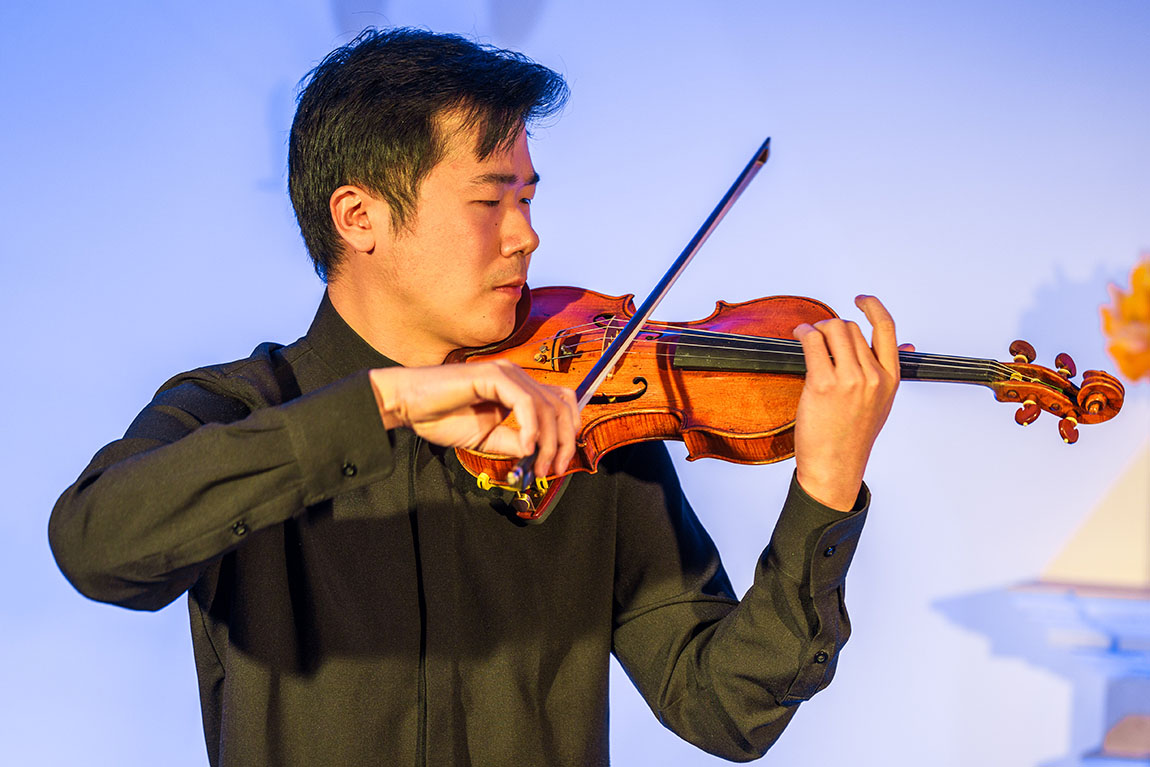
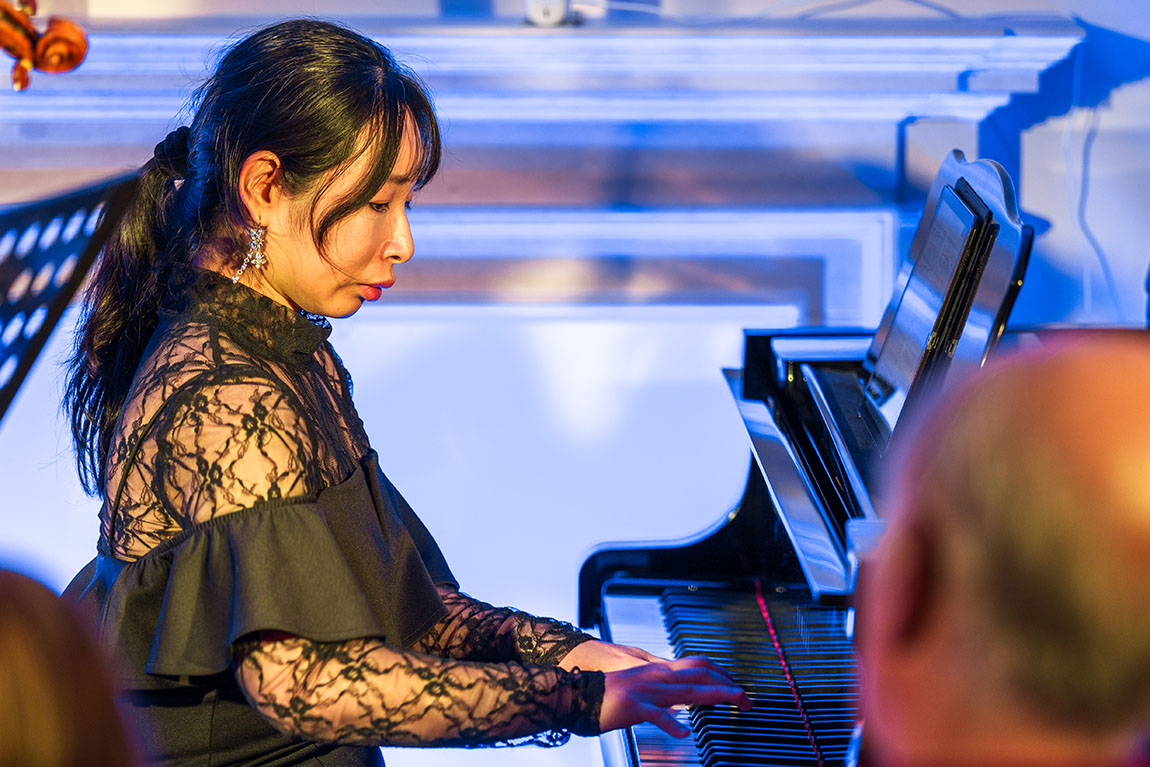
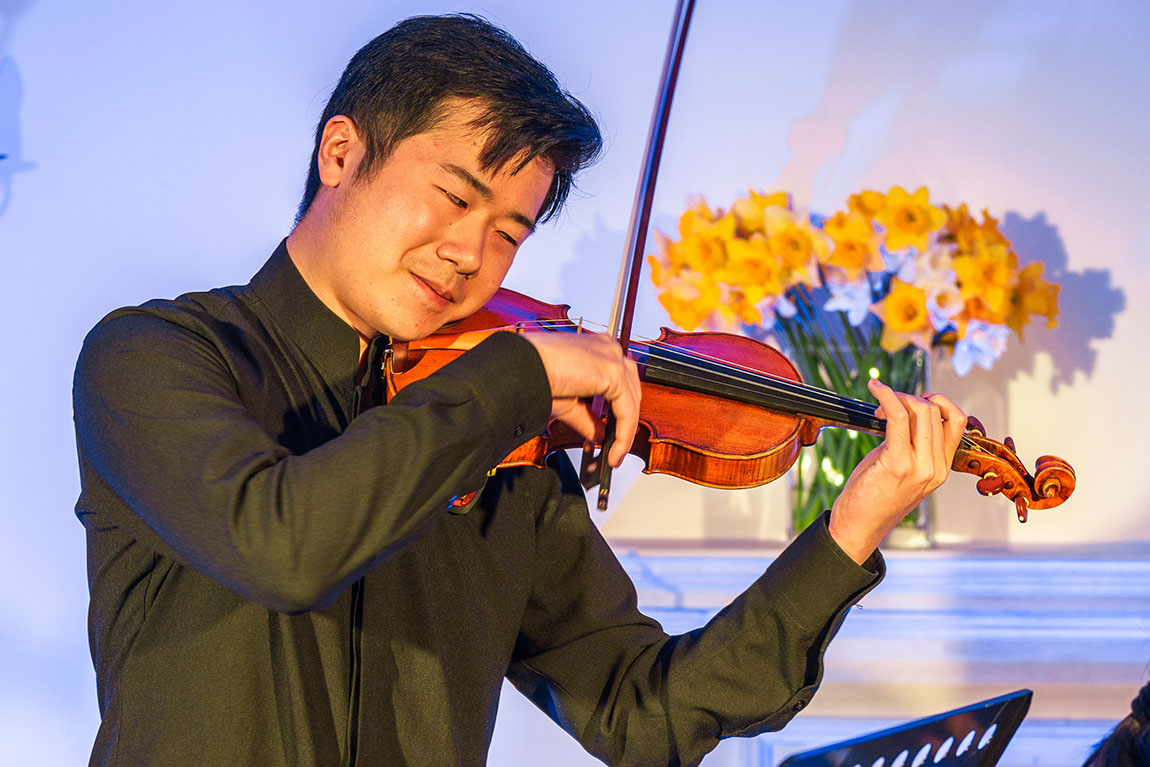
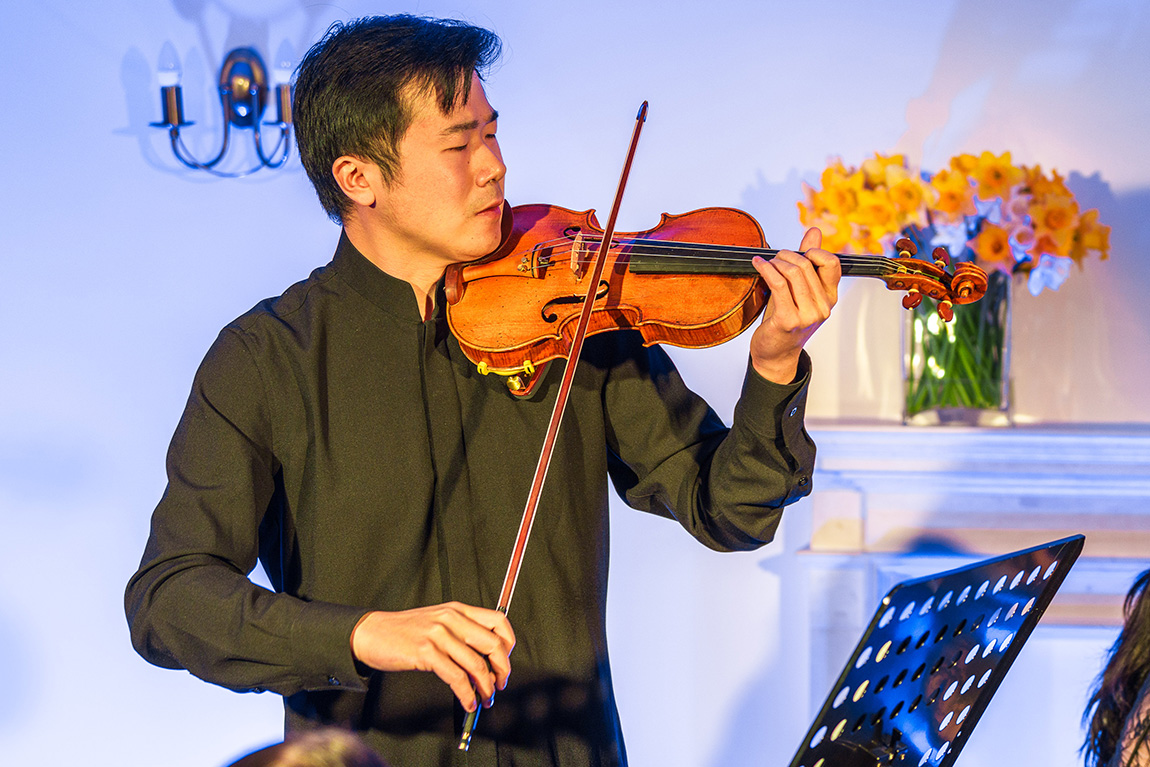
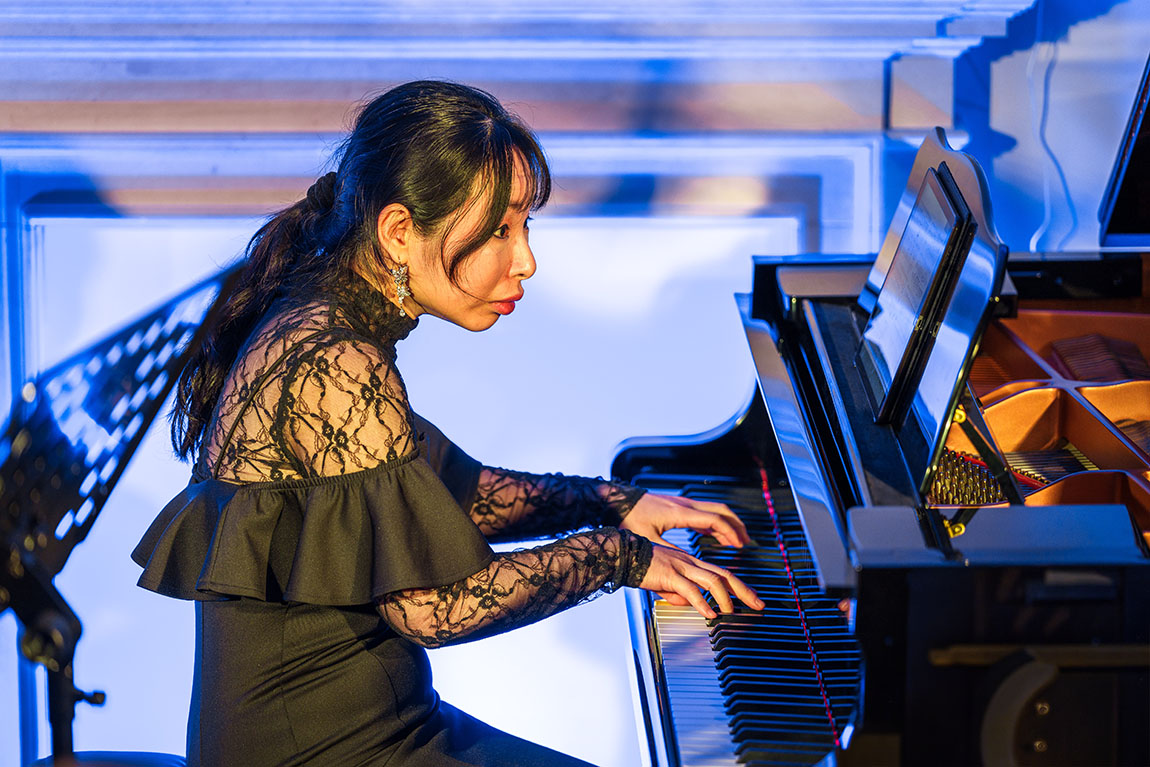
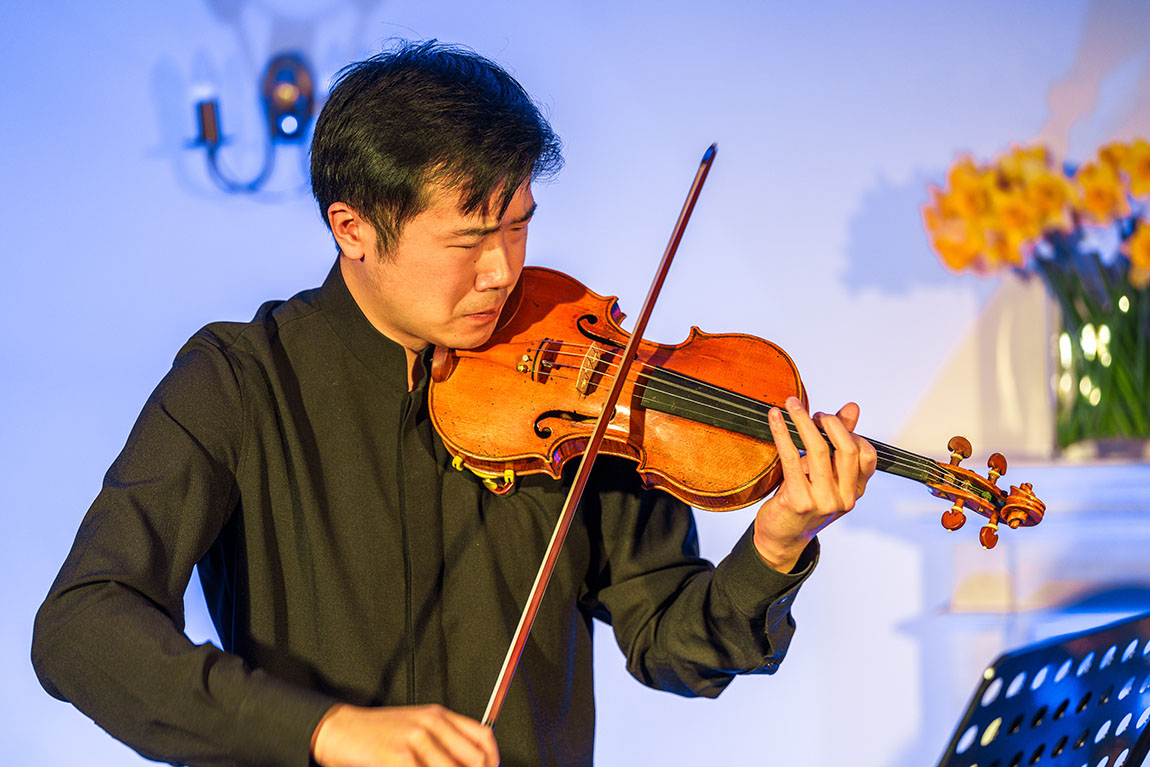
It was a fantastic evening of triumphant virtuosity combined with glorious theatrical, operatic and lyrical moments. Often this type of virtuoso-heavy programme could be over the top, at times too intimidating and unapproachable, but there was no hint of that in Simon Zhu’s playing. Together with masterful piano collaborating acutely played by Jennifer Han-Wen Yu, Simon showcased fiendishly technical pieces one after another with ease. He literally blazed through the pieces while demonstrating his undoubtedly flawless technical mastery (and he was on top form this evening!). What set him apart and made him loveable was that there was no typical egocentric soloist attitude in him. Simon’s focus remained on the audience throughout – to convey the beauty and musicality of Paganini and Ysaÿe’s demonic works. And I should mention that he created a special sound world for the audience to indulge in; during all those acrobatic leaps, harmonics, pizzicatos, octaves, double-stops and more, one could not help to notice the gorgeous range of tonalities, from the sharp-edged, powerful sound that penetrated the air to the sweetest whispering tone that could melt the coldest heart.
Rather than being pinned down to the seat feeling overwhelmed, it was a concert to be enjoyed. Simon never lost sight of the musical enjoyment of the audience, bringing us joy, wit, beauty and thrill. The singing voices never got blurred, the clarity of lyrical melody lines was always clear, while his trusting partnership with Jennifer captured each work’s mood vividly. Their timing was so impeccable, it was as if they could read each other’s next move blindfolded. Simon and Jennifer’s amazing partnership was most noticeable in the emotionally charged Schumann’s Violin Sonata No. 1, where the piano and violin act as dramatic partners.
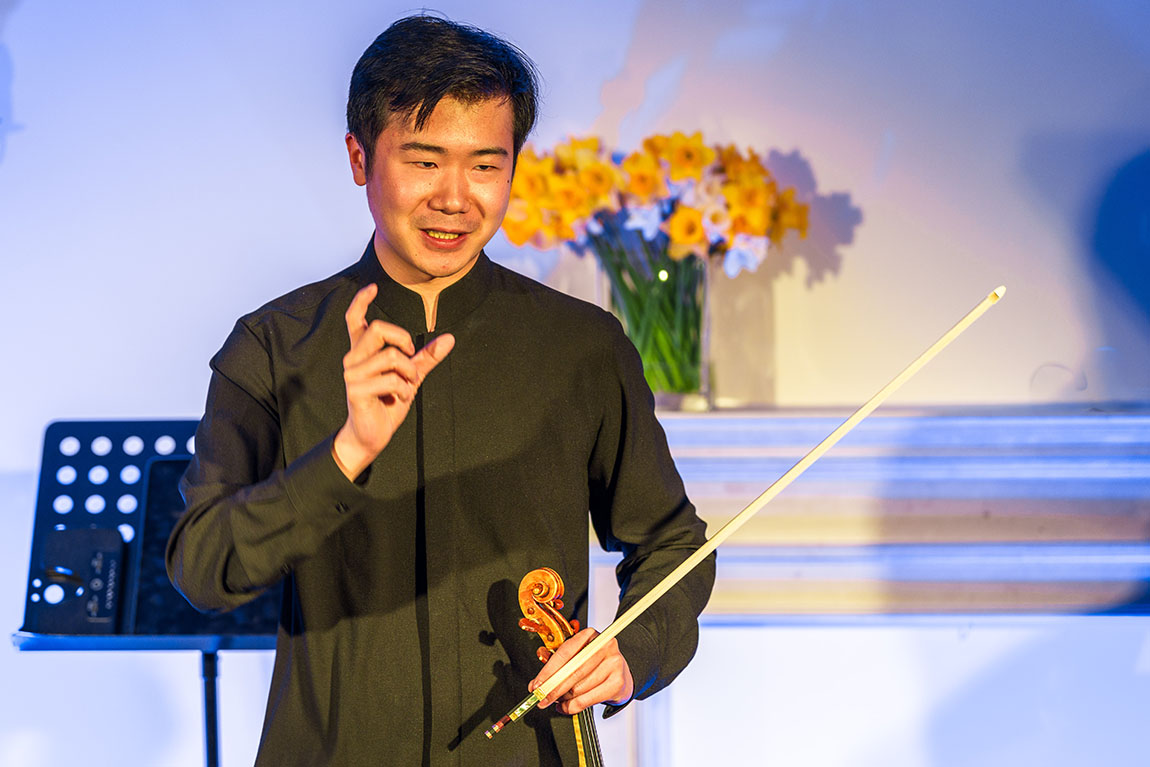
We also enjoyed Simon’s informative introductions, for example, that Paganini’s Caprice No. 5 has unique bowing which is only used in this caprice – meaning that the performer must spend days learning this particular bowing technique just to play this particular etude! And that Schumann wrote an accompaniment for each of Paganini’s 24 Caprice. There is always something new to learn!
This evening’s concert had a wondrous cycle on its own, starting with painstakingly romantic Schumann, travelling through Paganini and Ysaÿe, and after three encores, coming back to Paganini Caprice No. 24 with the piano accompaniment written by Schumann. An excellent and well-thought-out all around performance.
PS The extra bonus for me was their second encore, Paganini’s Cantabile, my all-time favourite piece but coincidentally chosen by them, and performed with the most touching singing tone and radiant vibratos.
Simon's Biography

Simon Zhu is a rising violinist with a versatile repertoire. His successes are remarkable. In October 2023, he won 1st prize at the 2023 International Violin Competition “Premio Paganini” in Genoa, Italy, and the special prize for the best Paganini concerto, as well as a number of important concert engagements – including the rare opportunity to perform on Paganini’s own violin “Cannone”. By Giuseppe Guarneri del Gesù from 1743.
Jennifer's Biography

Han-Wen Jennifer Yu, a native of Taichung, Taiwan. She earned a Bachelor of Music in piano performance from the Tunghai University (Taiwan), where she graduated with the highest honors with Dr. Juanelva Rose and Dr. Thomas Linde; a Master of Music degree in Collaborative Piano with Dr. Cameron Stowe, Dr. Pei-Shan Lee and Prof. Jonathan Feldman from New England Conservatory; and a Konzertexamen (equal as doctor program in Taiwan) at the HMT Leipzig with professor Gudrun Franke in piano chamber music, and minor in solo piano with professor Gerald Fauth.
Programme Notes
Schumann: Violin Sonata No. 1
Schumann’s First Violin Sonata belongs to the Düsseldorf period, and, like much of his music from 1851, it compresses a range of feeling into a concentrated design. He wrote the sonata in a few days, between 12 and 16 September, and later spoke of it with some dissatisfaction. Yet what may have seemed severe to him is what gives the work its power. Nothing is relaxed or ornamental. The music enters charged, as if the emotional argument had begun before we arrived.
The first movement, marked Mit leidenschaftlichem Ausdruck, opens with an idea that sounds impassioned and unstable. The violin reaches upward, the piano answers and drives forward, and the two instruments are drawn into a world of pursuit, resistance and uneasy lyricism. Schumann does not present themes as solid blocks so much as living thoughts, constantly altered by rhythm, register and harmony. Tenderness can darken in an instant; impassioned speech gives way to something private and questioning. For all its compactness, the movement feels symphonic in tension, propelled by syncopations and surging phrases that look toward Brahms.
The central Allegretto offers contrast, though not simple repose. Its theme has the poise of a song, and the movement suggests an intermezzo remembered from a calmer world. Yet Schumann never lets the music settle for long. Harmonic turns, hesitations and changes of accent keep the listener off balance. The violin often seems to emerge from within the piano texture rather than stand above it, a reminder that this is a duo, not a virtuoso sonata with accompaniment.
The finale, Lebhaft, restarts the drama with wiry, urgent energy. Its restless motion suggests perpetual movement, but Schumann also allows earlier lyric impulses to return, sharpened by pressure and memory. At moments one senses a recollection of the sonata’s opening world, as though the music were glancing backwards even while hurtling ahead. The close does not neatly resolve the work’s tensions; it gathers them into a blaze. In a programme largely devoted to public brilliance, this sonata offers a different kind of virtuosity: not exhibition, but intensity, dialogue and poetic compression.
Paganini: La Campanella
La Campanella, originally the finale of Paganini’s Second Violin Concerto of 1826, is one of his famous inspirations. Its nickname, “the little bell”, comes from the bell that punctuates the rondo theme, giving the music its gleaming profile. In recital it becomes a marvel of lightness and control. The violin leaps across spaces, flashes into harmonics and seems to escape gravity. Yet the piece is not only acrobatic. The bell motif lends it wit and mischief, so that brilliance appears to smile. Paganini turns difficulty into theatre: precise, airborne and playful.
Paganini: Caprices
The Twenty-Four Caprices transformed the violin étude into something freer, riskier and more theatrical. Each one isolates technical challenges, but each also projects a distinct character. They do not feel like lessons; they feel like invention under pressure.
No. 5 is among the briefest and most exhilarating. Ascending arpeggios and plunging descents create a sensation of flight, while the central section introduces springing bow strokes that test articulation and nerve. The caprice is over almost before one has grasped it, but its effect is electric.
No. 24 has the authority of a finale. Its severe A minor theme and contrasted variations became one of the most fertile ideas in later music, inspiring composers from Liszt and Brahms to Rachmaninoff. Paganini’s own treatment remains astonishing. Passagework, multiple stopping, left-hand pizzicato and ricochet bowing all appear, yet the display never feels cumulative. Each variation sharpens our sense of the theme beneath it, so that virtuosity becomes composition. The result is both study and spectacle, a summation of Paganini’s art.
Paganini: I Palpiti
If La Campanella presents Paganini the conjuror, I Palpiti shows Paganini the operatic fantasist. Like many early nineteenth-century virtuosos, he knew that audiences loved hearing familiar melodies transformed, and Rossini offered ideal material. The theme comes from “Di tanti palpiti” in Tancredi, an aria so popular in its day that it swiftly escaped the opera house. Paganini takes its vocal grace as his starting point, then subjects it to dazzling metamorphoses.
The introduction already sets a theatrical scene, rich in expectancy and gesture. When the theme appears, its songfulness is unmistakable: one hears why Paganini chose it. Rossini’s melody has shape, ease and memorability, and the violin can both imitate and intensify its cantabile line. But the tune is only the beginning. In the variations that follow, Paganini explores one technical resource after another, not as abstract display but as dramatic reinterpretation. Double stops, harmonics, rapid leaps and left-hand pizzicato all alter the melody’s character while keeping its outline alive in the listener’s ear.
That balance between the vocal and the instrumental is the secret of the piece. However brilliant the writing becomes, the memory of the original song remains. We hear not only feats of dexterity but a singer’s line refracted through instrumental imagination. Beneath the bravura lies an instinct for pacing and architecture. I Palpiti is more than a showpiece on a popular tune: it is a theatre of transformation, in which melody, memory and display animate one another.
Ysaÿe: Caprice
Ysaÿe’s Caprice after Saint-Saëns stands later in the lineage of violin display, yet it belongs unmistakably to the tradition Paganini helped create. Ysaÿe was one of the supreme violinists of his age, admired as much for his musicianship as for his command, and this reimagining of Saint-Saëns’s Étude en forme de valse shows both qualities. The source is a piano étude, but the result is no dutiful transcription. Ysaÿe reshapes it for violin with a performer-composer’s instinct for colour, line and flourish.
The waltz character remains elegant, capricious and faintly ironic, but the violin adds glamour. Phrases can sing, tease and sparkle in a breath, and the work becomes a miniature drama of style. Unlike Paganini’s more openly combustible brilliance, Ysaÿe’s virtuosity often wears a finer finish: one notices not only difficulty but poise, tonal allure and wit. As a conclusion to this programme, the Caprice offers a view of virtuosity refined into elegance.